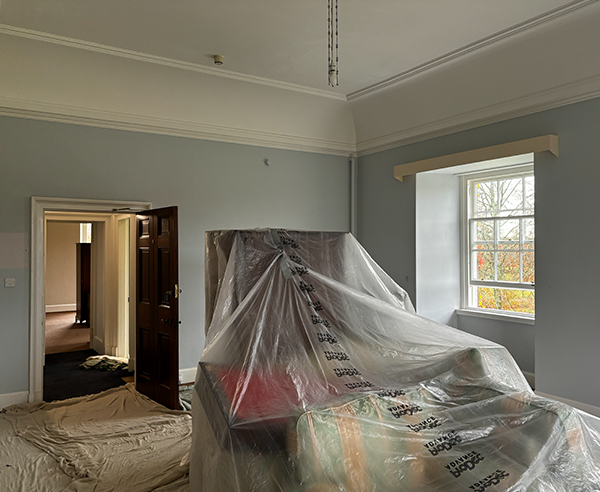
Project Background
The Burn is a historic country house estate in Aberdeenshire, Scotland, with origins dating back to the late 18th century and later Victorian development. Like many buildings of this type, it was designed with a clear hierarchy of spaces — from formal rooms used for business and hosting, to private bedrooms and functional service areas.
Working alongside bursar Jan Clarke, the objective of this historic building restoration project was to reintroduce colour schemes that reflected the building's original time period, moving away from the flat magnolia finishes that had been applied over time. The focus was on restoring character, depth, and authenticity while maintaining a high standard of modern finish.
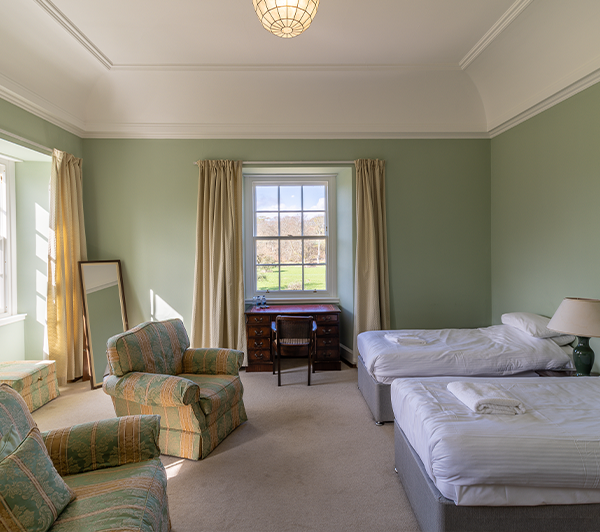
Bedrooms – Heritage Green Restoration
The project began with the bedrooms, which were some of the first areas completed as part of the wider historic building restoration works.
These rooms are large, with high ceilings and plenty of natural light, making them ideal for softer heritage tones. A green-based colour scheme was selected, in keeping with traditional palettes commonly used in Georgian and Victorian interiors. Greens were historically popular in country houses as they reflect the surrounding landscape and create a calm, restful environment.
All ceilings, walls, and woodwork were completed throughout these rooms. The finish brought a noticeable transformation — replacing lifeless magnolia with a warmer, more sympathetic scheme that enhances the natural light and architectural features.
This phase set the standard for the rest of the historic building restoration project, both in terms of finish and attention to detail.
Servants' Quarters Hall – Restoring Structure and Purpose
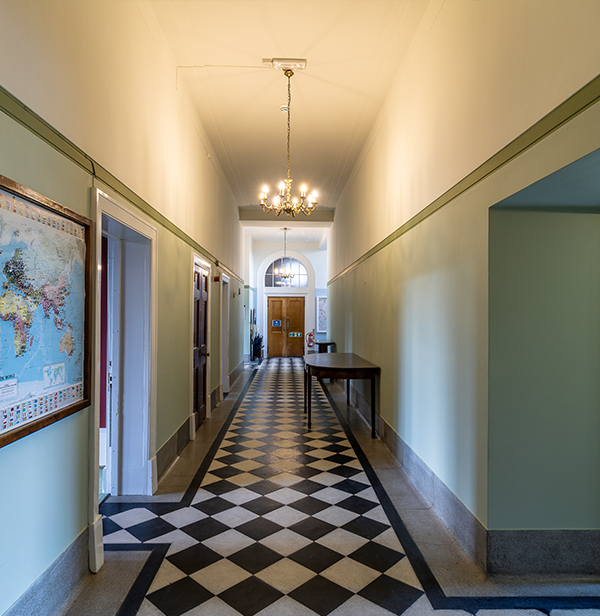
The next area completed was the servants' quarters hall, a long corridor originally used by staff to move efficiently between different parts of the house.
In buildings like The Burn, these corridors played an important role in the day-to-day running of the estate. They allowed staff to operate behind the scenes, keeping service routes separate from the main living and reception areas. While more functional in nature, they were still designed with features such as dado rails and durable finishes.
As part of the ongoing historic building restoration, the client chose a three-colour system:
- A lighter tone for the upper walls and ceilings
- A defining colour across the dado rail
- A deeper tone for the lower section of the walls
With ceiling heights of approximately 4 metres, this layout helped break up the scale of the space while maintaining its original proportions. The use of multiple tones adds depth and structure, making the corridor feel more balanced and visually interesting while staying true to its heritage.
The Red Room (Business Room) – Full Transformation
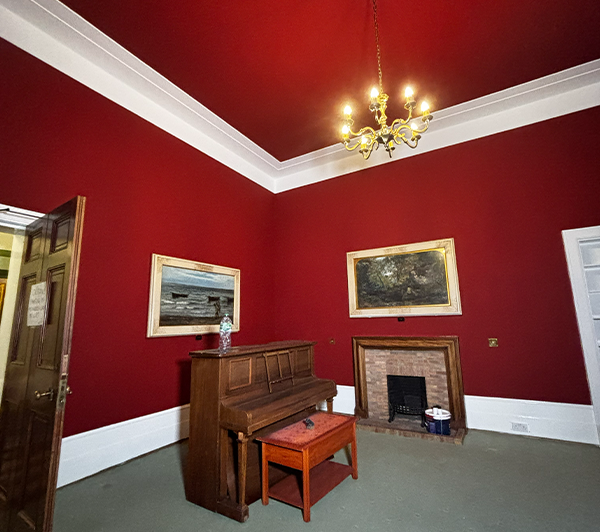
The next stage of the historic building restoration focused on the business room, which had previously been finished in standard magnolia and lacked any real presence.
Historically, rooms like this would have been used for meetings, administration, or receiving guests in a more formal setting. Rich, deeper colours such as reds were commonly used to reflect importance, warmth, and status.
This room was transformed using a bold red scheme, immediately giving the space a stronger identity and bringing it back in line with the character of the building.
From a technical point of view, this was one of the more challenging areas within the historic building restoration. Strong colours require careful preparation and consistent application to achieve an even, high-quality finish. The woodwork was completed using the same process used for high-gloss door finishes, ensuring sharp lines and a durable result.
The end result is a space that feels intentional, confident, and in keeping with its original purpose.
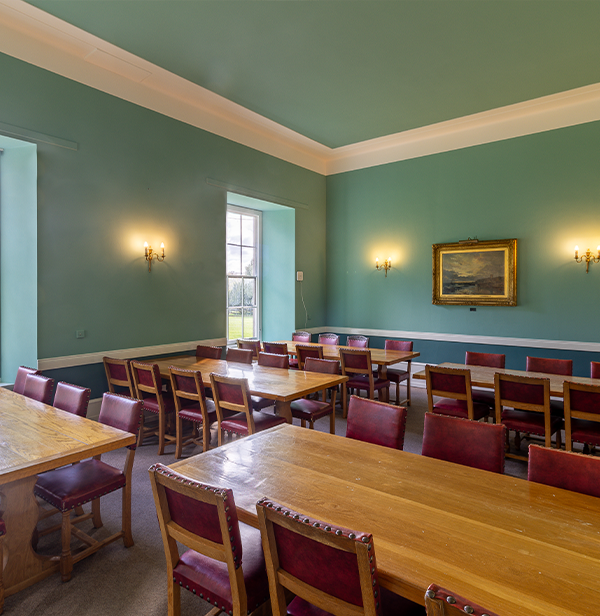
Dining Area – Enhancing a Social Space
A further key area within this historic building restoration project was the dining room, a large, open space designed to accommodate groups and communal use.
In traditional country houses, dining rooms were central to daily life — used not only for meals but also for social gatherings and formal occasions. These spaces were often designed to feel welcoming yet refined, with colours chosen to complement both natural light and the surrounding furnishings.
The chosen scheme continued the building's strong use of heritage greens, tying the space in with the overall design direction of the historic building restoration. The softer green tones work particularly well in this room due to the large windows, allowing natural light to lift the colour and create a bright, airy environment.
Given the scale of the room and the amount of furniture, achieving a consistent, clean finish across all surfaces was essential. Walls, ceilings, and woodwork were completed to a high standard, ensuring durability in a space that sees regular use.
The final result is a dining area that feels fresh, cohesive, and in keeping with the building's character — balancing practicality with a traditional aesthetic.
Conclusion
This historic building restoration project at The Burn focused on more than just decorating — it was about restoring the building's identity through colour and finish.
By working with historically appropriate tones and understanding how each space was originally used, the overall feel of the building has been significantly improved. Each area now reflects both its heritage and its modern use, creating a balance between tradition and quality craftsmanship.
From the calm green bedrooms to the structured service corridors, the bold business room, and the refreshed dining space, the project demonstrates the impact that the right preparation, colour choices, and attention to detail can have on a historic property.