
Project Background
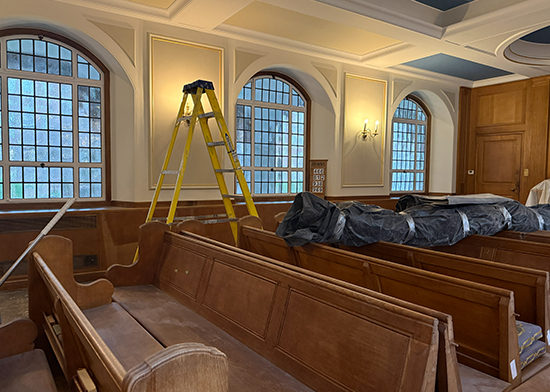
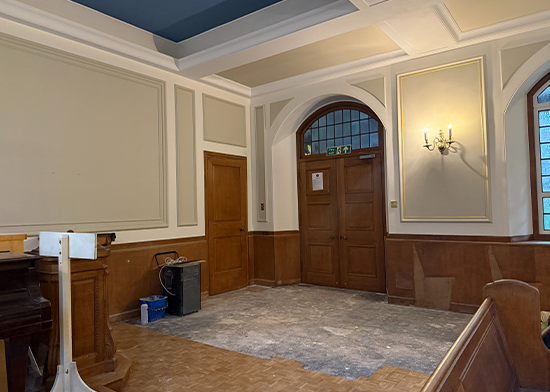
This project involved a chapel heritage restoration following significant internal water damage caused by a waste pipe failure. The extent of the damage required a full reassessment of the original scope, with works focused on reinstating both the structure and finish while preserving the building's historic character.
Initial Condition
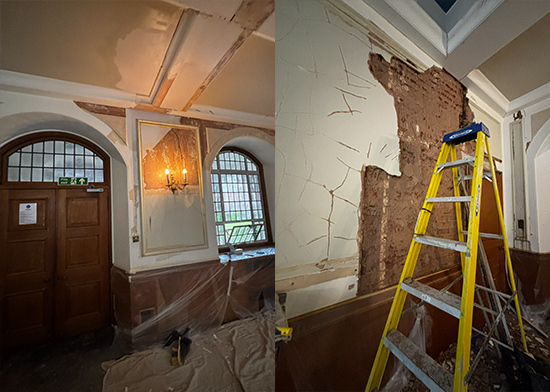
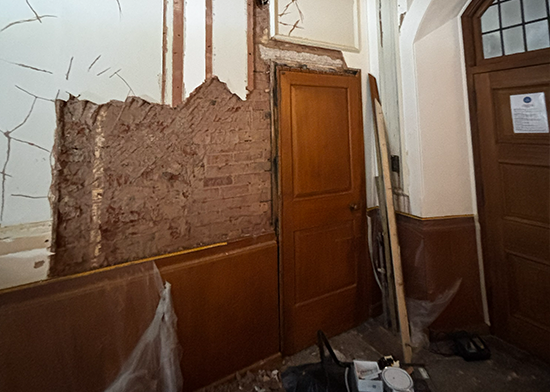
Prior to our involvement, sections of the internal brickwork had been removed, rebuilt, and skimmed. However, during early-stage preparation, it became clear that the condition of the remaining plaster was severely compromised.
The substrate had retained excessive moisture, resulting in a loss of integrity. Even light pressure caused the plaster to break down into a soft, unstable material, confirming it was no longer suitable for retention. This highlighted the need for a more in-depth heritage restoration approach, rather than surface-level repair.
Revised Approach
Due to the condition of the existing surfaces, the specification was revised to allow for full removal and reinstatement in line with heritage restoration best practices.
All affected plaster was stripped back to the original brickwork, ensuring only sound substrates remained. The structure was then allowed sufficient time to dry fully before further works commenced.
To stabilise the surface while maintaining breathability—essential in heritage building restoration—a suitable sealing solution was applied. This allowed residual moisture to escape, significantly reducing the risk of future failure.
Reinstatement Works
Following preparation, new plasterboard was installed using a dot and dab method.
Due to inconsistencies and movement within the original brickwork, a standard installation approach was not always appropriate. Methods were adapted on a section-by-section basis, with additional bonding applied where required to achieve a secure and long-lasting fixing.
This stage was critical in ensuring the new surfaces provided a stable and durable foundation, in keeping with the standards expected in heritage restoration projects.
Decorative Restoration
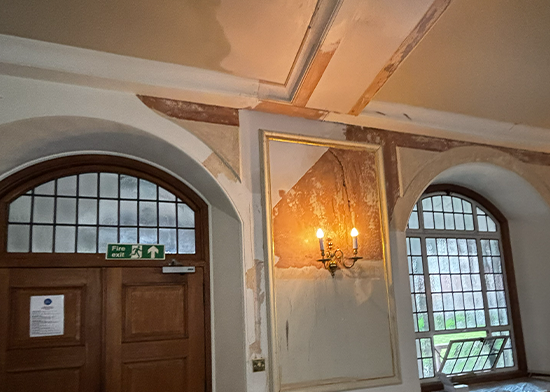
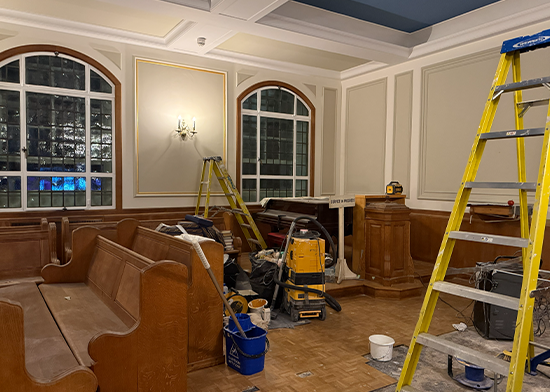
Once reinstated, the chapel underwent careful decorative heritage restoration to reflect its original appearance.
Particular attention was given to preserving the integrity of existing architectural features, including mouldings and period detailing. The objective throughout was to achieve a finish that was both visually consistent and sympathetic to the building's historic character.
Project Considerations
This heritage restoration project presented a number of challenges, including:
- Extensive moisture damage
- Unstable and failed substrates
- Structural inconsistencies within original brickwork
- The need to preserve period and architectural features
In addition, the programme required a high level of commitment to meet deadlines, with extended working hours including evenings and weekends.
These challenges were managed through experience, adaptability, and a methodical, conservation-led approach to problem-solving on site.
Outcome
The chapel was successfully restored from a compromised and unstable condition to a fully reinstated and finished space.
The completed heritage restoration maintains the character of the original structure while providing a sound, breathable, and durable substrate for long-term performance.
This project demonstrates the importance of correctly diagnosing underlying issues and adapting the specification accordingly—an essential principle in any successful heritage restoration project, rather than relying on superficial repairs.


